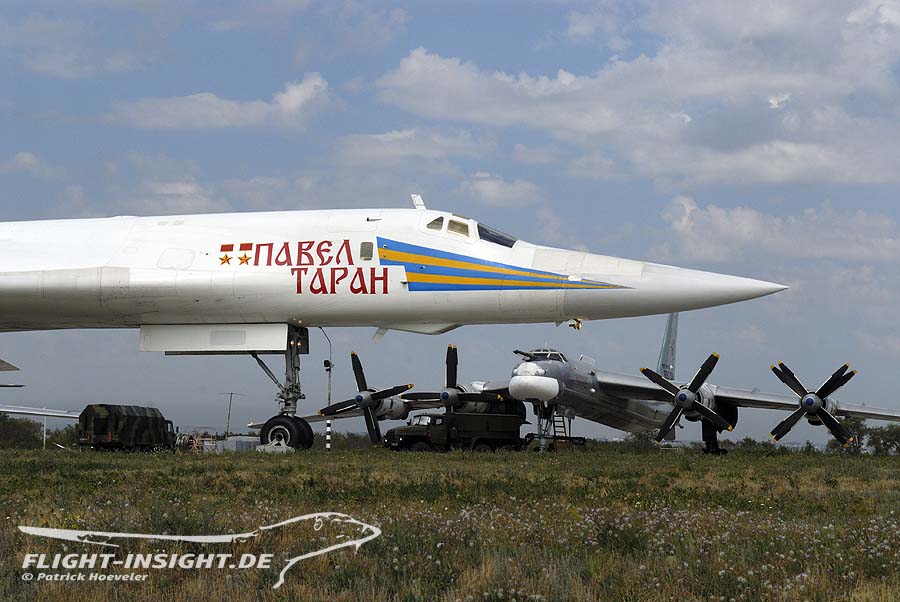
Engels Air Base
An der Seite der weißen Schwäne in Engels fliegt die die Tu-95MS. Der schnellste Turboprop der Welt stellt neben der Tu-22M Backfire nach wie vor das Rückgrat der Fernfliegerkräfte dar, obwohl Russland zur Zeit des Zusammenbruchs der Sowjetunion nur über 84 Exemplare verfügte. Die letzte Version der „Bear“-Familie hatte unter anderem stärkere NK-12MP-Triebwerke erhalten und war im September 1979 zu ihrem Jungfernflug gestartet.
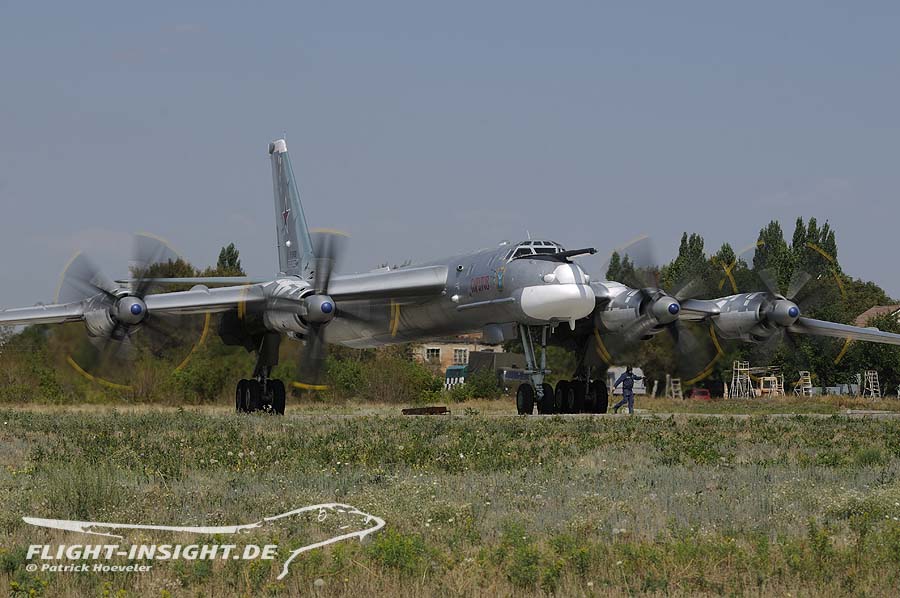
Auch sie kann, wie die Blackjack, Abstandsflugkörper mit nuklearen Sprengkörpern tragen. Die Tu-95MS ging 1982 zunächst in Semipalatinsk in Dienst und ist heute neben Engels und der Ausbildungseinheit in Rjasan noch auf dem Fliegerhorst Ukrainka im Fernen Osten Russlands stationiert.
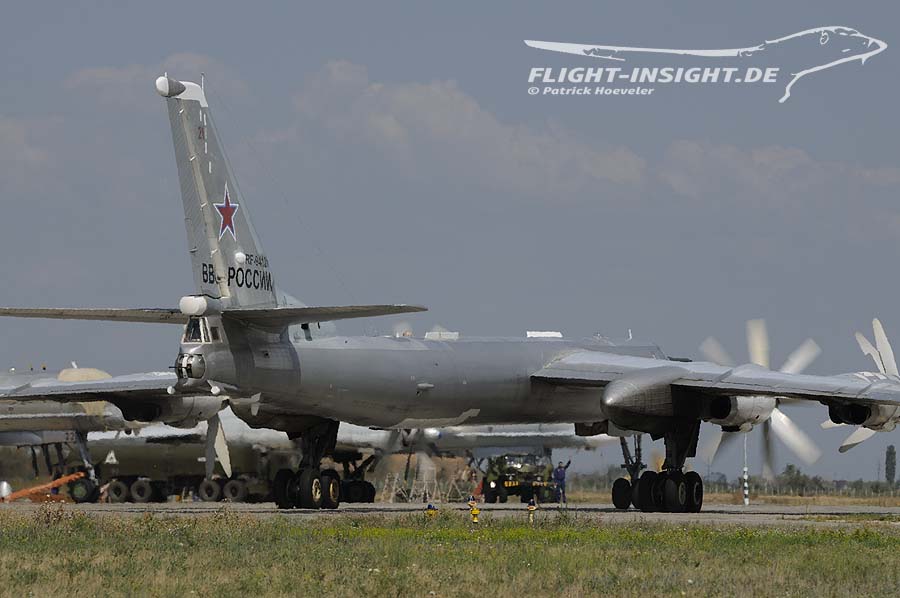
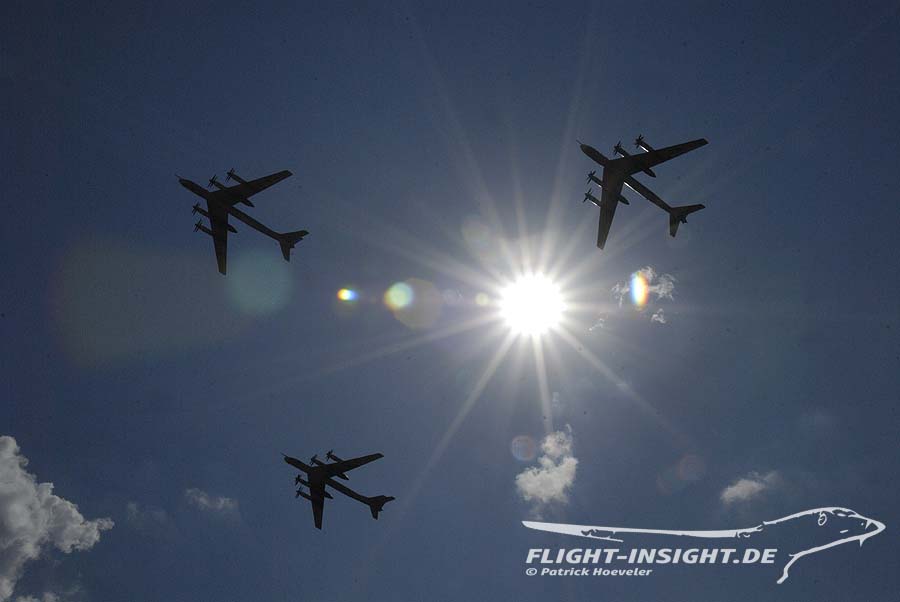
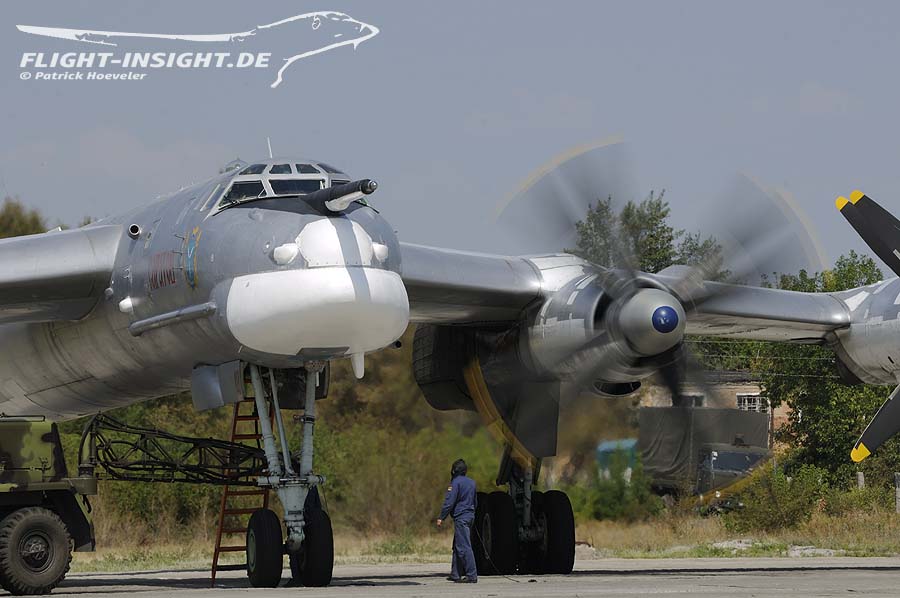

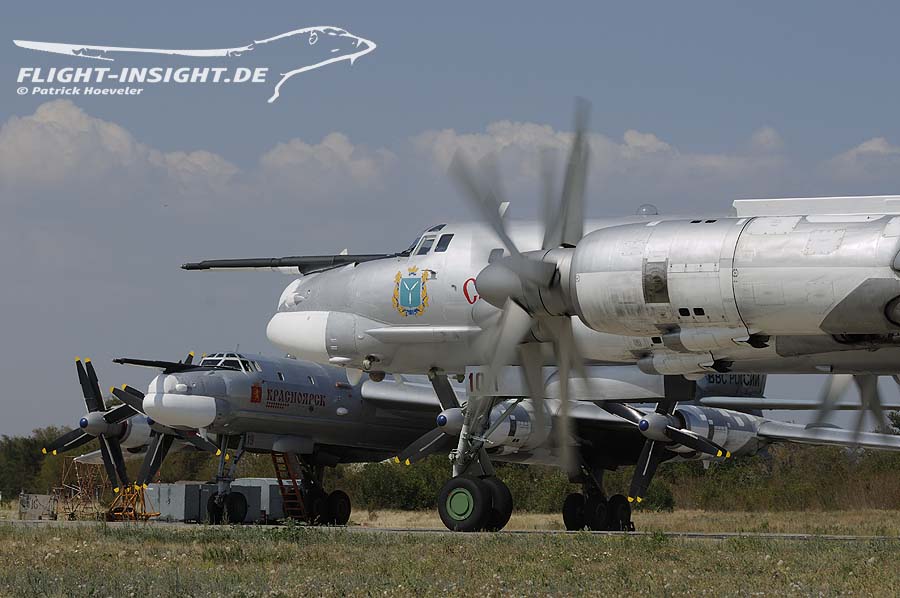
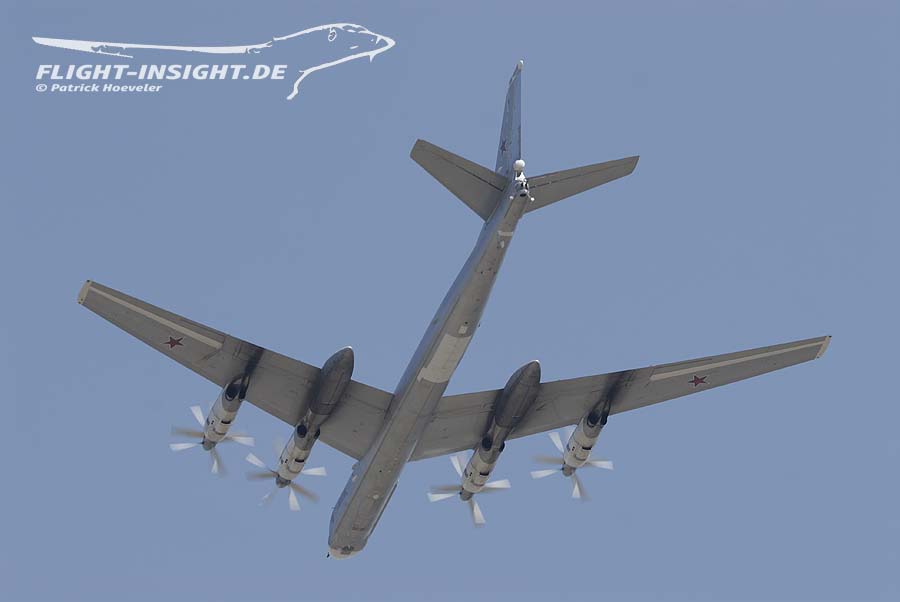


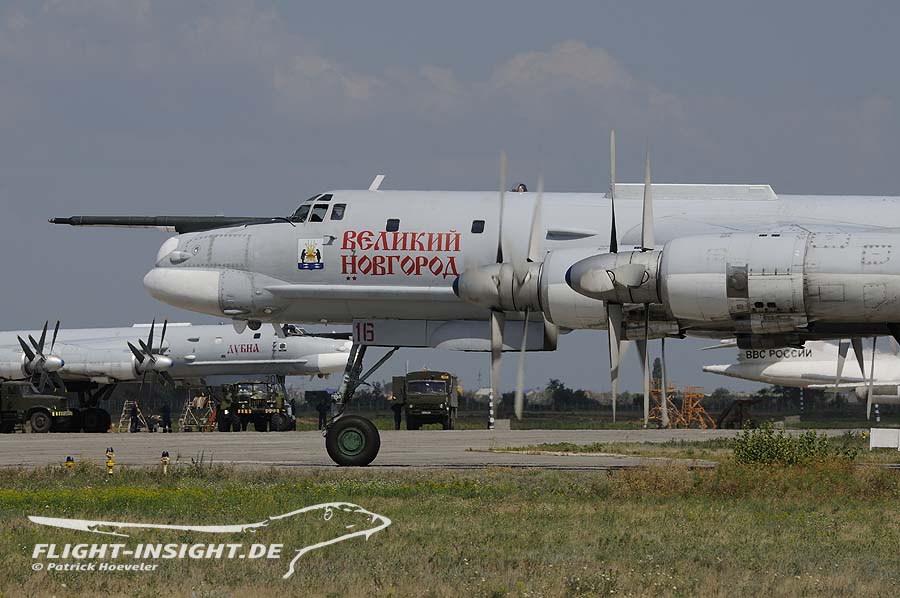
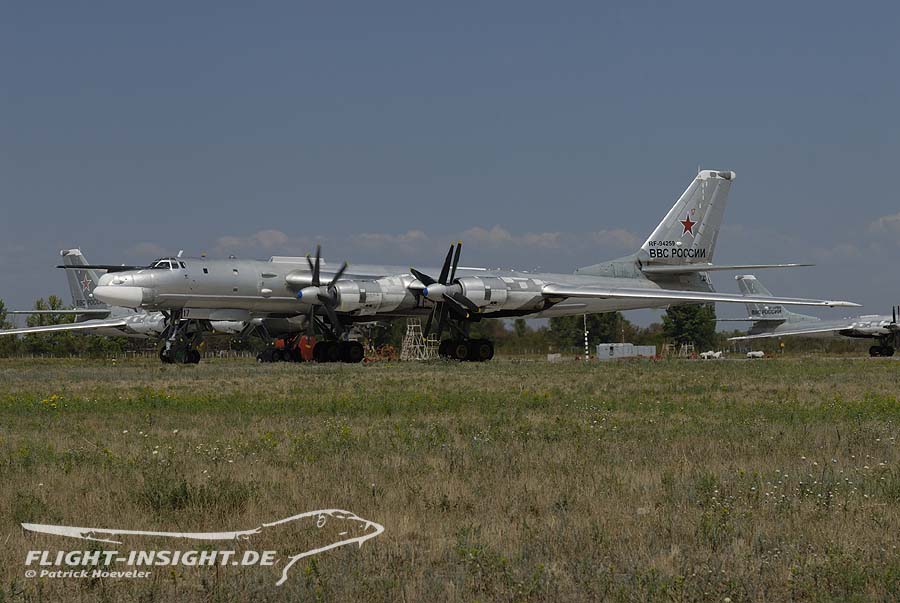
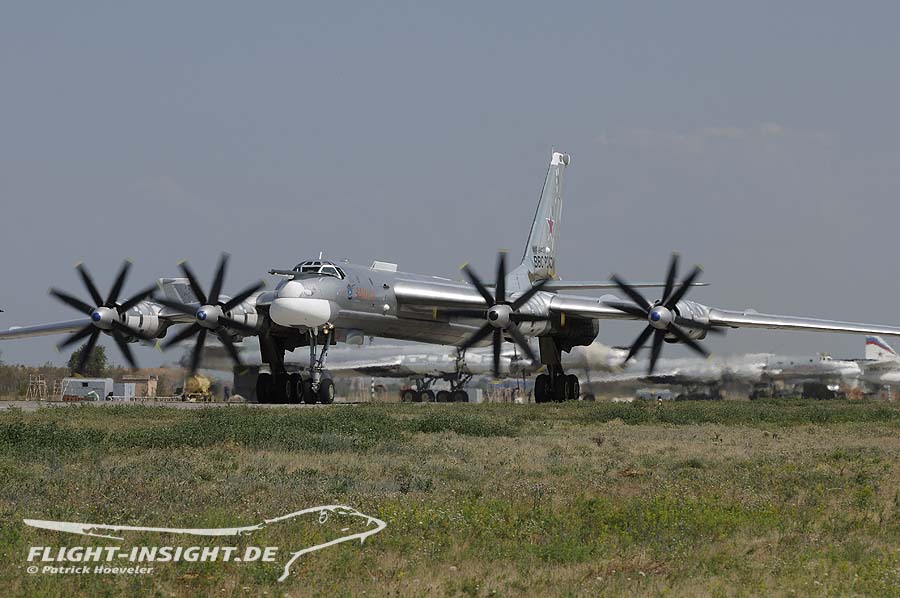
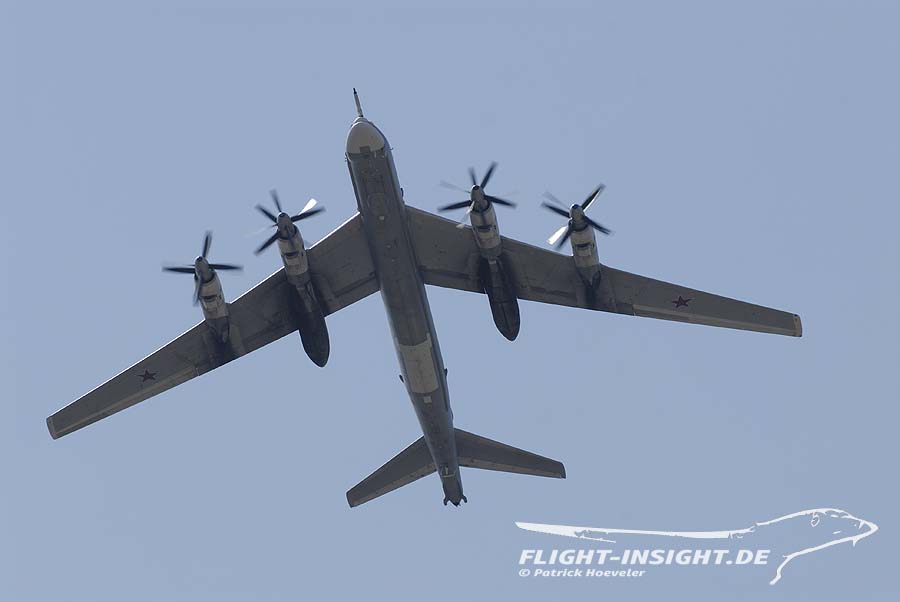
Engels Air Base near Saratov is home to the pride of Russia: the Mach 2-fast Tupolev Tu-160 Blackjack. Flying side by side with the world’s heaviest combat aircraft is also the tried and tested Tu-95 Bear. At first, the small Russian town of Engels, about 15 kilometres southeast of Saratov on the Volga River, seems like a normal place during our visit in 2012. You drive past a McDonalds fast-food restaurant and numerous apartment buildings until suddenly a Tu-22 Blinder appears at the side of the road. The former supersonic bomber is here for a reason, because the area of one of Russia’s most important airfields begins at the wall behind it: the country’s strategic bombers, including their nuclear weapons, are based in Engels. The Tupolev Tu-95MS Bear and Tu-160 Blackjack of the Russian Long Range Aviation Forces (Dalnjaja Aviazija, abbreviated DA) regularly take off from the three-and-a-half-kilometre-long runway.
The 6950th Air Base is home to the 121st Heavy Bomber Regiment (Tyasholi Bombardirovochni Aviapolt, TBAP), which flies theTu-160, and the 184th TBAP and their Tu-95MS. Aviation history in the region began as early as the 1930s with the training of military pilots in Engels, which the Red Army expanded enormously during World War II. In the early 1950s, construction began on a new airbase called Engels-2, which was one of the few bases in the Soviet Union capable of operating the then-new Myasishchev M-4 Bison jet bomber. Compared to the previous models, this required a long, paved runway for take-off and landing. Meanwhile, the pilot school moved to Tambov. The first jet bombers finally landed in Engels in February 1955. The Bison remained active here until the early 1990s, most recently as a tanker.
As a kind of showcase base, Engels was also to become the home of the new Tupolev Tu-160 Blackjack. The world’s heaviest fighter is also known as the “White Swan” in Russia and had made its maiden flight on 18 December 1981. However, construction activities as part of the conversion to the improved Bison variant 3M hampered the introduction of the heavyweights delivered from April 1987 onwards, so that the 184th Regiment (today with Tu-95 in Engels) was the first unit to receive the Tu-160. The catch: the unit was stationed in Priluki, Ukraine, and after the collapse of the Soviet Union, Ukraine simply kept the now 19 aircraft. Russia tried to buy back the bombers in complicated and protracted negotiations. Only a few years later were the parties able to agree that Ukraine would return a total of eight Blackjacks as compensation for gas deliveries. Since the highly complex jets had been grounded for years, the transfer to Engels proved to be quite difficult. Ten more ended up in the scrap yard, some of them with barely 100 flying hours on the clock. Only one Blackjack remained in Ukraine, in the Poltava Aviation Museum. All the aircraft built in the meantime came directly to Engels.
In February 1992, the first Tu-160 landed in Engels. However, regular flight operations were still a long way off, as, for example, most of the ground equipment and the flight simulator were left behind in Priluki, Ukraine. At least many crews and technicians joined the Russian Air Force and left the Ukraine. In early 1993, the fourth new Blackjack touched down on the runway at Engels, still far too few for regular flight operations. The plan to move six aircraft from the design office and the flight test institute to Engels was not realised. Likewise, the originally planned 100 aircraft were not built; for lack of money, just over 30 were built, but not all of them are operational. The scarce financial resources also ensured that the bombers could only fly very rarely. It was only a few years ago that Russia resumed regular training flights.
Flying alongside the White Swans in Engels is the Tu-95MS. The world’s fastest turboprop, along with the Tu-22M Backfire, remains the backbone of the long-range aviation force, even though Russia had only 84 of them at the time of the collapse of the Soviet Union. The last version of the “Bear” family had received, among other things, more powerful NK-12MP engines and had taken off on its maiden flight in September 1979. Like the Blackjack, it can also carry stand-off missiles with nuclear warheads. The Tu-95MS first entered service at Semipalatinsk in 1982 and is now stationed at the Ukrainka air base in Russia’s Far East, in addition to Engels and the training unit at Ryazan.